
Why Every District Needs a Certified PBIS Tier 1 Trainer On Staff
Grow your Own Expert
Think about the last time your district rolled out a new piece of software. You didn't just buy the license and hope everyone figured it out, you sent someone to get certified. That person came back able to train the rest of the staff, troubleshoot problems in real time, and make sure the tool actually got used the way it was designed to be used. The certification paid for itself many times over, because you stopped depending on the vendor and started building capacity in-house.
PBIS, Positive Behavioral Interventions and Supports, deserves the exact same investment strategy. And KOI Education's Certified PBIS Tier 1 Trainer program is built to do precisely that: turn one or two people on your team into the in-house engine that drives PBIS implementation for years to come.
The "Train-the-Trainer" Model Isn't New
If you've ever certified a teacher as a Google Certified Trainer, a Microsoft Innovative Educator Trainer, or sent your literacy team through Wilson Reading System or LETRS facilitator training, you already understand the logic behind this model. In each case, the district isn't just buying a workshop - it's buying a *multiplier*. One trained person can now onboard dozens of colleagues, sustain the program after the original consultant leaves, and adapt materials to local context instead of running everything through an outside vendor every time there's a new hire or a refresher need.
PBIS Tier 1 trainer certification works the same way:
Instead of bringing in an external presenter every time your district needs a PBIS refresher, a Tier 1 training day, or support onboarding new staff, you build that expertise internally — permanently.
What the Certification Actually Involves
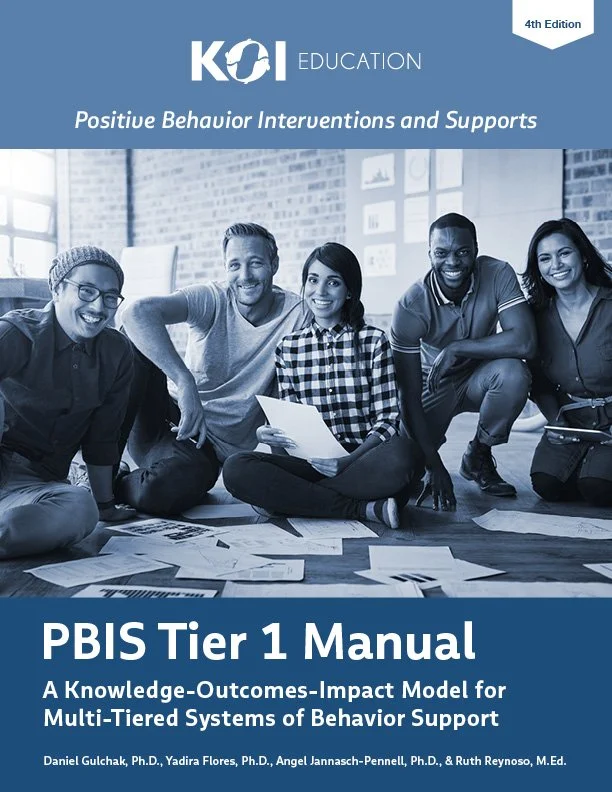
KOI Education's Tier 1 Trainer-Leader-Coach (TLC) course, offered both in-person and online, is a rigorous, multi-day professional learning experience, not a one-off webinar. In-person training runs five full days (8:00 AM–3:00 PM) and requires 6–8 hours of pre-course reading on top of that. Online training is 4 days long (1-2 hrs online webinar, the rest of the day is asynchronous learning). Participants:
Engage in daily research-reflection discussions with PBIS experts and fellow trainers-in-training
Watch expert trainers model delivery of the curriculum, then practice presenting that same content themselves to demonstrate mastery
Study the coaching continuum and the tools needed to support school and district PBIS teams
Examine the seven critical skills of effective presenters, so they can establish credibility and sustain rapport as a trainer, leader, and coach
Graduates walk away with a license to use up to 45 PBIS curriculum slide decks, trainer manuals, exclusive TLC resources, a PBIS trainer resource book, research articles, handouts and templates, and a certificate for up to 30 hours of CEUs plus a shareable digital badge.
That structure should feel familiar if you've ever earned a professional tech certification: pre-work, guided instruction, hands-on demonstration of competency, and a credential you can actually show off - a badge and a certificate of attendance.
The Real Analogy: It's Less Like a Workshop, More Like a Certification Exam
A single PD day on classroom management is like a lunch-and-learn on a new app — useful, forgettable, gone by next semester. A Tier 1 Trainer certification is closer to earning a Amazon Web Service certificate or a district literacy coach earning Orton-Gillingham or Fundations trainer status: it requires prerequisite experience (KOI requires 1+ years implementing PBIS as part of a school team, background in behavior analysis or special education, and training/coaching disposition), sustained study, and a demonstration of mastery before the credential is granted. That rigor is exactly what makes the credential valuable — it's not just knowledge transfer, it's verified capability.
Benefits for the District: Measurable Outcomes, Not Just Good Intentions
Here's where this pays off in numbers your board and superintendent will actually care about:
Lower cost-per-training-hour over time. Once a staff member is certified, the district stops paying external consultant day-rates for every Tier 1 training, refresher, or new-hire onboarding session — the license and curriculum are yours to reuse indefinitely.
Faster time-to-fidelity for new schools or new staff. Instead of waiting for a vendor's calendar to open up, an in-house trainer can run onboarding on your district's timeline, shortening the gap between "school adopts PBIS" and "school implements PBIS with fidelity."
Consistent implementation across every campus. A single certified trainer (or trainer team) delivering the same 12 critical Tier 1 systems — teaming, staff ownership, assessment, expectations, teaching, reinforcement, accountability, data analysis, roll-out, maintenance, coaching, and presentation skills — means every school hears the same message, reducing the drift you get when each site interprets PBIS differently.
Trackable teacher competency growth. Because trainers document who's been trained, on which systems, and to what level, districts can build a real skills matrix — the same way IT departments track which staff hold which software certifications — instead of relying on vague "we did a PD day on this" records.
Built-in coaching capacity, not just training capacity. The TLC course explicitly covers coaching responsibilities and the coaching continuum, so your certified trainer doesn't just deliver a workshop and disappear — they can coach teachers through implementation dips, which is where most PBIS efforts actually stall.
CEU and recertification credit teachers can bank. The certificate covers up to 30 hours of CEUs, giving participating teachers measurable, transcript-worthy credit toward license renewal — a direct, quantifiable line item you can point to in a teacher's professional growth plan.
Retention and leadership pipeline benefits. Teachers who become certified trainers gain a visible leadership credential and a badge they can share on LinkedIn or in an evaluation portfolio — the same career-capital effect that makes staff want to pursue instructional coach or literacy specialist certifications rather than leave for another district.
Reduced behavior-referral variability that's actually attributable to training. Because trainers own the data-analysis system as part of Tier 1, districts get a trainer who can tie office discipline referral trends directly back to specific systems that were or weren't implemented — turning "PBIS isn't working" into "here's exactly which system needs a refresher."
The Bottom Line
Districts don't hesitate to certify staff on a new gradebook platform, a new reading intervention program, or a new data system — because everyone understands that certified in-house expertise beats one-time outside training. PBIS deserves the same treatment. A Certified PBIS Tier 1 Trainer isn't a line item for one workshop; it's an investment in a colleague who can train, coach, and sustain your district's behavior framework for years, with credentials — and results — you can actually measure.
Interested in sending a team member? Districts are encouraged to send two or more people, since KOI recommends a trainer team rather than a single point of failure.